




The 2026 FIFA World Cup will be unlike any edition before it.
For the first time in men’s tournament history, 48 teams will compete across three host countries: the United States, Mexico and Canada.
The expansion is not just about adding more nations. It changes the rhythm of the tournament, the pressure of the group stage and the number of teams who can realistically dream of a deep run.
With more matches, more qualification paths and more room for surprise, the 2026 World Cup is built to feel bigger from the opening game.
Three host nations, one huge event
The tournament will be the first men’s World Cup staged across three countries. Mexico will make history by hosting matches at a third different World Cup, while Canada will stage men’s World Cup games for the first time.
For the United States, it marks a return to hosting duties after the 1994 World Cup, but this edition will be far larger. Bigger stadiums, longer travel distances and a continentwide schedule will make planning and preparation a major challenge for every team.
That scale could become one of the defining features of the tournament. Squads will not only need talent and tactics, but also depth, recovery plans and the ability to adapt quickly to different conditions.
How the new 48-team format works?
FIFA’s expanded format will feature 12 groups of four teams.
The top two teams from each group will qualify for the knockout rounds, along with the eight best third-placed sides. That creates a 32-team knockout bracket and increases the tournament to 104 matches.
The familiar knockout structure remains, but the route out of the group stage will feel different. Finishing third could still be enough, which means goal difference, late goals and results in other groups may become more important than ever.
That could lead to more scoreboard watching, more cautious decisions in final group matches and more drama around teams trying to stay alive.
Why the group stage could be tougher than expected?
A bigger tournament does not necessarily mean an easier one for the favourites.
With 12 groups, top seeds may still face awkward opponents early. Some teams will arrive with compact defensive systems, others with aggressive pressing, while several outsiders will look to hurt bigger nations on the counterattack.
The pressure will also be intense. Hosts, defending champions and traditional powers will all be expected to start well. In a four-team group, one bad performance can quickly turn the final match into a survival test.
At the same time, the new format gives ambitious underdogs more belief. Knowing that third place can be enough to qualify may encourage teams to take risks rather than simply protect damage against stronger opponents.
Outsiders who could shake the tournament
Recent World Cups have shown that organisation, athleticism and belief can take teams a long way.
Morocco’s run in 2022 proved that disciplined defending, intelligent pressing and fast transitions can trouble even the strongest opponents. More teams are now built around similar ideas, making the gap between traditional powers and emerging nations feel smaller.
Japan remain one of the most interesting teams to watch, with their collective structure, pressing triggers and ability to strike quickly in transition.
African contenders such as Senegal have the physical and technical quality to cause problems, while South American teams outside the usual giants are rarely comfortable opponents.
The hosts will also carry major storylines. Canada have shown they can play with pace and directness, while the United States will expect a breakthrough on home soil with a generation shaped by top European football.
Matchups that could define the early rounds
Some group-stage games could feel like knockout ties from the start.
A meeting between the Netherlands and Japan would offer a fascinating contrast between possession control and transition speed. France against Norway would bring star power and tactical variety, with France’s depth tested against Norway’s direct attacking threat.
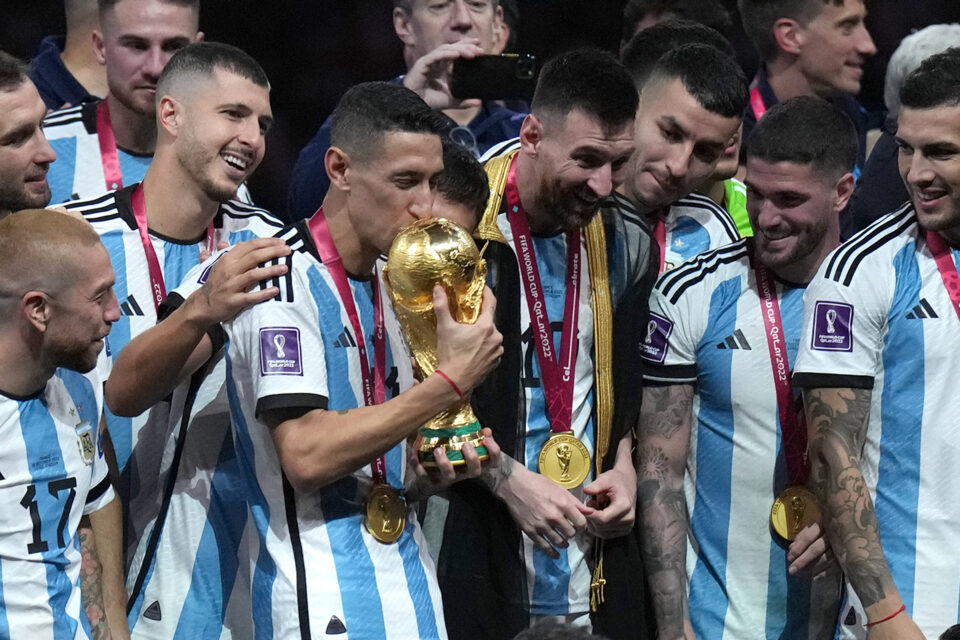
England against Croatia would revive a modern World Cup rivalry, with past knockout history adding extra tension. And later in the tournament, the possibility of another Argentina and Portugal showdown would instantly become one of the biggest stories in football.
The expanded format makes those paths harder to predict, but that is part of the appeal.
A World Cup designed for drama
The 2026 World Cup is designed to be broader, louder and more open than previous editions.
The traditional giants will still carry the highest expectations, but the expanded field gives more teams a chance to make history. The group stage could be more unpredictable, the knockout race more chaotic and the margins even thinner.
With 48 teams, three host nations and 104 matches, the tournament promises more than just a bigger World Cup. It could deliver one of the most unpredictable editions football has ever seen.





Comments