




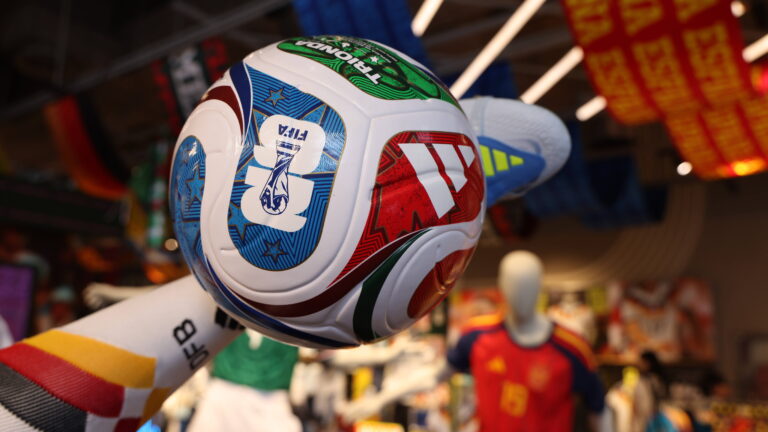
The 2026 FIFA World Cup is being promoted as the biggest football tournament ever staged. With 48 teams, 104 matches, three host countries and 16 host cities, it will be a World Cup unlike anything the sport has seen before.
The tournament will run from June 11 to July 19 across Canada, Mexico and the United States, with the final set for New York New Jersey. On paper, it looks like football’s ultimate global festival: more nations, more matches, more fans and more stories.
For smaller countries, the expanded format creates a historic opportunity to reach the world stage. For broadcasters and sponsors, it means more games and more attention. For FIFA, it turns the World Cup into an even larger global product.
But the bigger question is harder to ignore: can a 104-match World Cup become too big for its own good?
Expansion brings opportunity and risk
The clearest benefit of the 48-team format is inclusion. More nations will experience the World Cup, and regions that previously had fewer places now have a stronger chance of representation.
That matters. The World Cup should not belong only to football’s traditional powers.
But expansion also brings a sporting risk. A 32-team tournament already produced mismatches. A 48-team version could create even more. Some new qualifiers may deliver unforgettable shocks, but others could struggle badly against elite opposition.
That could affect the group stage. If too many early matches feel predictable, the tournament may lose some of its sharpness. More football does not automatically mean better football.
The third-place issue
The 2026 format will feature 12 groups of four teams. The top two from each group will advance, along with the eight best third-placed teams. That will create a 32-team knockout stage.
This structure avoids the awkward three-team group format that FIFA had previously considered, but it also makes the group stage less simple.
In the old format, the equation was clear: finish first or second, or go home. In 2026, a team could finish third, wait for other results, and still progress.
That may produce drama, but it could also create confusion. It may also encourage cautious football, especially for teams that know a draw or even a narrow defeat might be enough to survive.
Player welfare is the biggest concern
The greatest risk may not be tactical. It may be physical.
Modern footballers already face a packed calendar. Domestic leagues, cup competitions, continental tournaments, international windows, expanded club events and long pre-season tours have reduced recovery time for many elite players.
The 2026 World Cup will arrive at the end of another demanding club season. The players fans most want to watch are often the ones who have played the most minutes.
By the knockout rounds, the tournament may become a test of survival as much as quality. That is a concern for players, and it is also a concern for the spectacle. Fans want to see the world’s best footballers at their sharpest, not managing fatigue under extreme pressure.
Travel and climate could shape the tournament
The 2026 World Cup will also be geographically massive.
Host cities will be spread across Canada, Mexico and the United States, creating long travel distances and different playing conditions. Teams may have to deal with changes in time zones, altitude, heat, humidity and recovery routines.
That matters because World Cups are often decided by small margins. A long flight, poor recovery, disrupted sleep or extreme weather can influence performance.
Heat could become one of the major stories of the tournament. June and July conditions in parts of North America can be severe, especially in cities where humidity and high temperatures are common.
Cooling breaks will help, but they cannot solve everything. Heat can reduce pressing, lower sprint intensity, increase fatigue and change the rhythm of matches.
Fans face a costly challenge
A bigger World Cup also creates a more complicated experience for supporters.
Following a team across three countries could be expensive and difficult. Flights, hotels, tickets, food, local transport and entry requirements could make the tournament one of the costliest ever for travelling fans.
That matters because World Cups are at their best when ordinary supporters fill cities with colour, noise and emotion. If travel costs and distances push many fans away, the tournament could feel more corporate and less connected to the people who make it special.
Bigger may not mean better on television
From a broadcasting perspective, 104 matches creates more content. But too much football can also create fatigue.
Casual viewers may not follow every match. News outlets and social media platforms will have to cover several games per day across different time zones. Even strong matches may quickly disappear into a crowded schedule.
Part of the World Cup’s magic comes from shared attention. Everyone remembers the same shocks, goals and controversies. If the tournament becomes too crowded, that global conversation could become more fragmented.
The best squads may benefit most
Expansion is meant to help smaller nations, and it will give more countries access to the tournament. But the longer format could still favour the biggest teams once the competition reaches the knockout rounds.
Elite nations have deeper squads, stronger medical departments and better recovery resources. Smaller teams often rely heavily on a few key players.
As fatigue builds, depth becomes more important. That could create a paradox: more nations get in, but the strongest countries may still be better equipped to survive the demands of the tournament.
A historic tournament with real pressure
None of this means the 2026 World Cup is destined to disappoint. It could still be extraordinary.
The expanded format may produce new heroes, first-time qualifiers, dramatic knockout games and stories from countries that rarely receive the global spotlight. Huge stadiums across North America could create spectacular scenes, while the tournament may also accelerate football’s growth in the United States and Canada.
But the risks are real because the ambition is so large.
The 2026 World Cup will be historic before a ball is kicked. It will be the biggest tournament in football history, stretched across a continent and watched by the world.
The challenge for FIFA is making sure bigger also means better. More matches, more teams and more money will not be enough on their own.
The real test is whether the World Cup can grow without losing the intensity, clarity and magic that made it football’s greatest event in the first place.





Comments