





Some teams win the World Cup and become immortal. Others lose it and become myth. Hungary’s national team of the early 1950s belongs to the second group.
Known as the Mighty Magyars, or the Golden Team, Hungary entered the 1954 World Cup as the most feared side on the planet.
They had Olympic gold, a devastating attack, revolutionary tactics and a run of dominance that made them look almost unbeatable. Yet their story is remembered not because they conquered the World Cup, but because they came so close — and because football was never quite the same after them.
The 1954 final became known as the Miracle of Bern. For West Germany, it was a rebirth. For Hungary, it was a wound. For football, it was proof that the best team does not always lift the trophy.
A team from the future
Hungary were not simply good. They looked tactically ahead of everyone else.
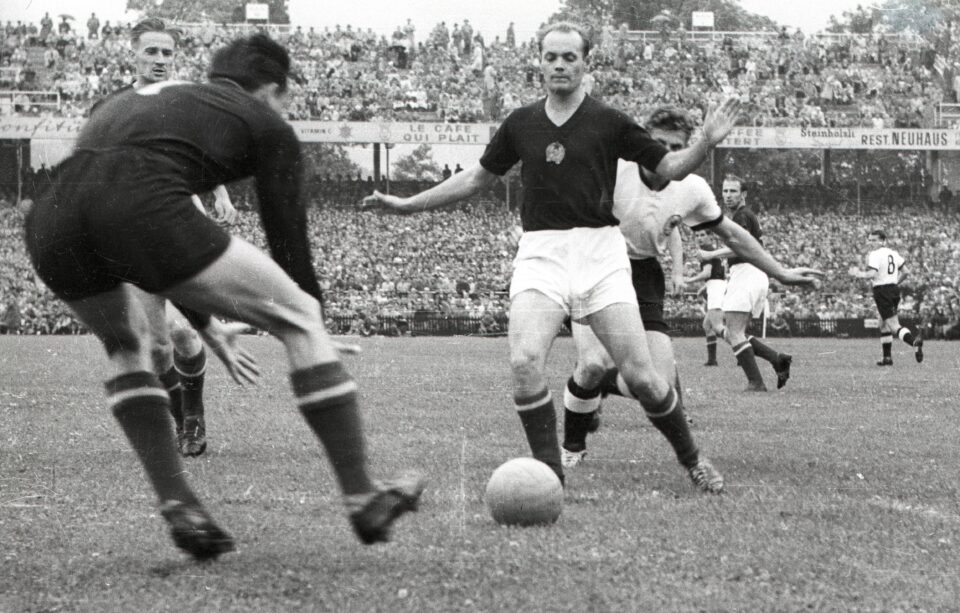
At a time when many teams still played in rigid structures, Hungary moved with unusual freedom. Their forwards rotated. Their midfielders controlled space. Their centre-forward, Nándor Hidegkuti, often dropped deep instead of staying high against defenders. That movement confused opponents who were used to marking fixed positions.
Ferenc Puskás was the star, but this was not a one-man side. Sándor Kocsis was a ruthless scorer, József Bozsik dictated play from midfield, Zoltán Czibor brought speed and unpredictability, and Hidegkuti became one of football’s great tactical disruptors.
This was the real genius of the Mighty Magyars: they did not just beat teams. They made opponents look outdated.
The day they shocked England
The world fully understood Hungary’s power on 25 November 1953, when they faced England at Wembley.
England, proud birthplace of modern football, had never lost at home to a team from outside the British Isles. Hungary destroyed that illusion with a 6-3 victory that FIFA later described as a performance that “influenced football across the planet.”
The match became known as the Match of the Century, but it was also a tactical humiliation. England’s defenders did not know whether to follow Hidegkuti when he dropped deep. If they followed him, space opened behind them. If they stayed back, he could turn and create.
Puskás provided the most famous moment of the game when he dragged the ball back to embarrass Billy Wright before scoring. It was not just a goal. It was a symbol: old football being fooled by new football.
Hungary’s win forced English football to question its methods, training and tactical assumptions. The country that had written the rules had been outplayed by a team that was rewriting them.
Olympic champions, World Cup favourites
Hungary’s rise did not begin at Wembley. They had already won Olympic gold in Helsinki in 1952. During that tournament, they beat Italy 3-0, Turkey 7-1 and Sweden 6-0 before defeating Yugoslavia 2-0 in the final.
By the time the 1954 World Cup arrived in Switzerland, Hungary were not dark horses. They were favourites.
They began the tournament brutally. They beat South Korea 9-0, then West Germany 8-3 in the group stage. That second result made the final even more shocking later, because Hungary had already crushed the team that would eventually defeat them.
The Golden Team seemed to have everything: goals, technique, confidence and tactical imagination. They were not just winning; they were overwhelming opponents.
The road to Bern
The knockout rounds were not easy. Hungary beat Brazil in a violent quarter-final remembered as the “Battle of Berne”, then defeated defending champions Uruguay in the semi-final. That Uruguay game was especially significant because Uruguay had never lost a World Cup match before.
But the tournament also damaged Hungary. Puskás had been injured in the earlier 8-3 win over West Germany and was not fully fit for the final. The team still had enough quality to win, but their best player was not at full strength.
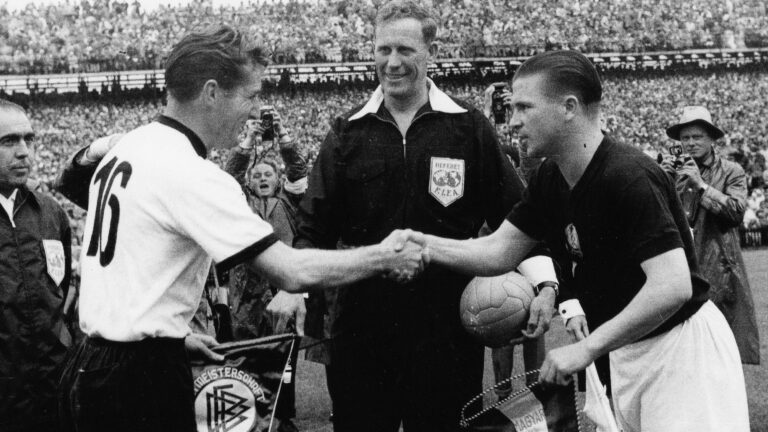
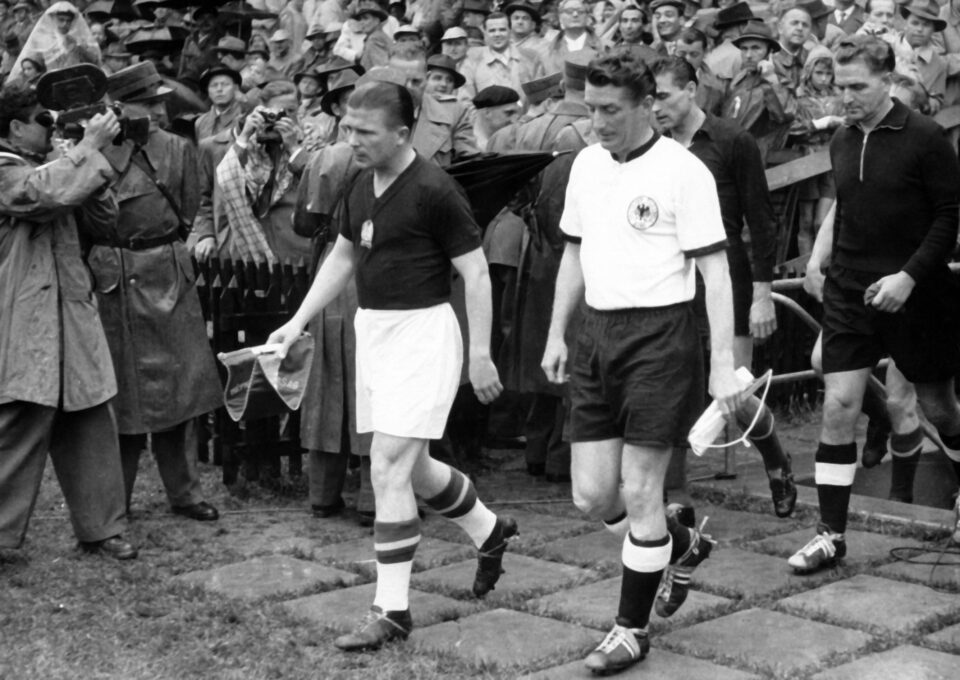
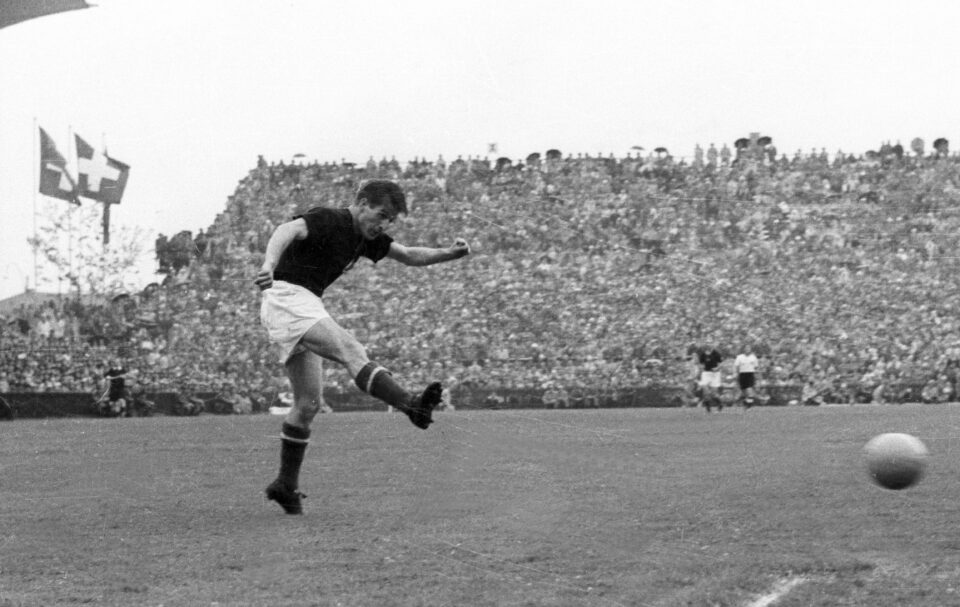
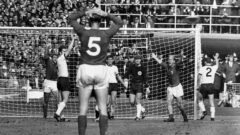
On 4 July 1954, Hungary met West Germany again at the Wankdorf Stadium in Bern. The conditions were wet. Hungary started perfectly, taking a 2-0 lead inside eight minutes through Puskás and Czibor. It looked like the expected coronation.
Then the story changed.
West Germany fought back. Max Morlock scored, then Helmut Rahn equalised. Late in the game, Rahn struck again to make it 3-2. Hungary pushed desperately and Puskás had a goal ruled out for offside. The final whistle confirmed one of the greatest shocks in World Cup history. FIFA remembers the match as West Germany stunning Hungary in the 1954 final.
The team that had seemed untouchable had lost the only match that mattered most.
Why they are still called the greatest team that never won it?
The phrase is not sentimental exaggeration. Hungary’s claim is built on dominance, innovation and legacy.
They were Olympic champions. They demolished England at Wembley. They scored freely. They beat major football nations. They entered the 1954 World Cup as the most advanced team in the world. Their only fatal flaw was that their worst-timed defeat came in the final.
The tragedy is what made the myth stronger. Had Hungary won in 1954, they would be remembered as one of the greatest World Cup winners. Because they lost, they became something more haunting: the team that football history still tries to explain.
Their influence can be seen in later tactical revolutions. The dropping forward, positional rotation, technical midfield control and collective attacking movement all feel modern. Hungary helped prepare the ground for Total Football, false nines and the idea that space matters as much as formation.
More than football
The result also carried political weight.
For West Germany, the Miracle of Bern became a symbol of recovery after World War II. It gave the country a moment of pride and international recognition.
For Hungary, the defeat became part of a darker national mood. Two years later, the 1956 Hungarian Revolution changed the country and scattered parts of the team. The Golden Team’s era was effectively broken.
That adds another layer to their legend. They were not just beaten in a final. They were interrupted by history.




Comments