




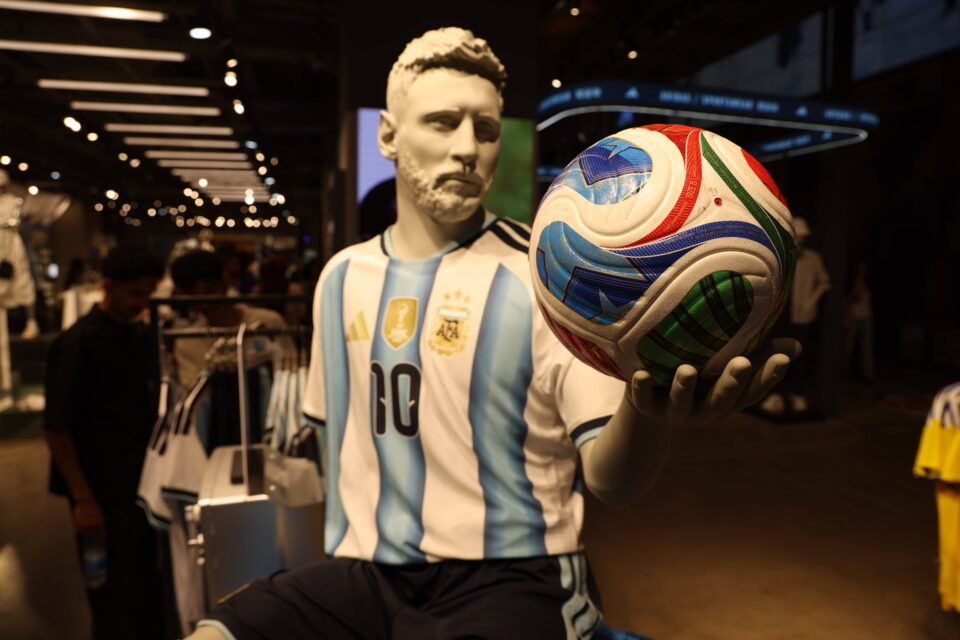
The 2026 men’s World Cup will bring a new host format, new stadiums and a new official match ball. According to research shared by The Conversation, Adidas’ Trionda ball is not only visually different, but could also behave differently in the air.
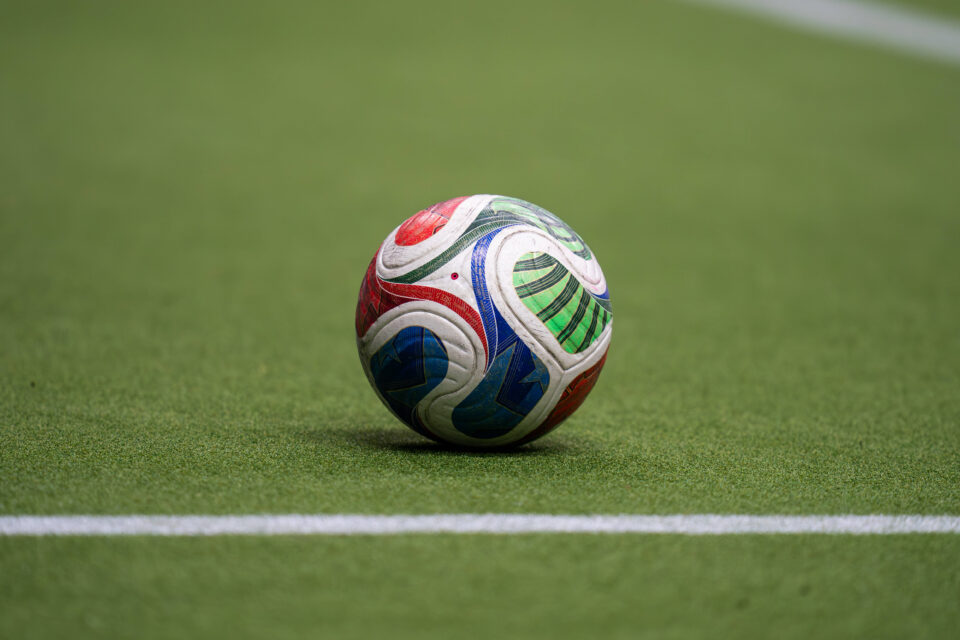
Adidas has supplied World Cup balls since 1970 and creates a new design for every tournament. For 2026, the Trionda stands out because it is the first four-panel ball in men’s World Cup history.
Its red, blue and green graphics represent the three host nations, Canada, the United States and Mexico.
Why Trionda’s design matters?
The biggest question is not how the ball looks. It is how it flies.
Researchers who have studied World Cup ball aerodynamics for the past 20 years tested Trionda in wind tunnels and compared it with recent tournament balls, including Al Rihla, Telstar 18, Brazuca and the much-criticised Jabulani from 2010.
The concern with any low-panel ball is smoothness. If a ball is too smooth, airflow around it can become unstable, leading to sudden dips, swerves and unpredictable movement. That was one of the major issues with Jabulani, which caused problems for goalkeepers at the 2010 World Cup.
What the tests revealed?
Trionda appears to avoid that same mistake. Although it has only four panels, Adidas has added deep seams, three grooves on each panel and fine surface texturing.
These features make the ball effectively rougher and help control how air moves around it.
Wind tunnel tests found that Trionda reaches its “drag crisis” at a lower speed than recent World Cup balls. In simple terms, that means its airflow changes earlier, at around 27 mph. By comparison, Al Rihla, Telstar 18 and Brazuca reached that point at higher speeds, while Jabulani’s critical range was much higher and more problematic.
The good news for players and goalkeepers is that Trionda showed more consistent behaviour at the speeds often seen in free kicks and corner kicks. That suggests it is unlikely to produce the kind of baffling movement that made Jabulani so controversial.
One possible drawback
There is one possible trade-off. At higher speeds, Trionda appears to experience slightly more drag than its recent predecessors. That could mean long passes, clearances or powerful shots may lose a little distance.
The difference is not huge, but elite players may still notice the ball dropping a few metres shorter than expected.
The tests focused on a non-spinning ball, so they cannot predict every shot, cross or clearance fans will see during the tournament. Spin, altitude, temperature, humidity and air pressure will all play a role once matches begin.
Technology inside the ball
Trionda also includes connected-ball technology to help officials with offside decisions. Unlike the 2022 Al Rihla, which had its measurement unit suspended in the centre, Trionda places the unit inside one panel, with counterbalancing weights in the other three panels.
For now, the evidence suggests the 2026 World Cup ball should be more reliable than risky. It may not fly exactly like the balls players are used to, but it does not appear likely to turn the tournament into another Jabulani-style controversy.
The real test, however, will come when the world’s best players start striking it under World Cup pressure.


Comments